
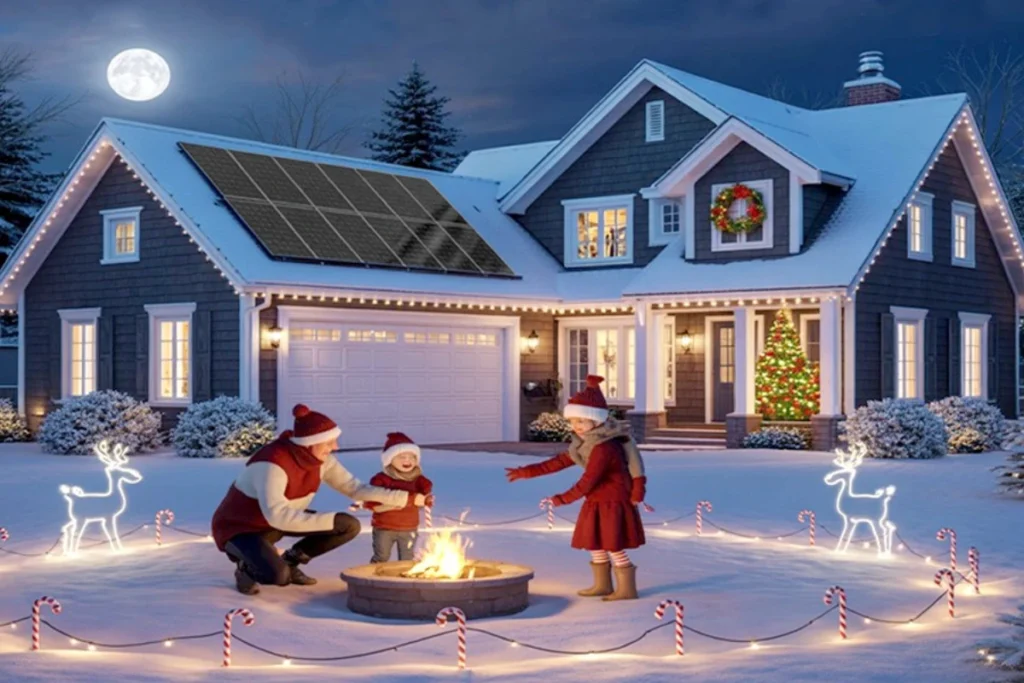
Many Florida homeowners love the idea of festive outdoor lighting, but they do not love the higher electric bill that can come with running lights every night. Others struggle with finding outdoor outlets, dealing with extension cords, or keeping decorations working through Florida’s heat, humidity, and rain.
That is where solar powered christmas lights outdoor become an attractive option. They use energy from the sun during the day and automatically illuminate your home at night. However, Florida’s climate creates unique challenges and opportunities that are different from many other states.
In this guide, you will learn how solar Christmas lights work, whether they are a good choice for Florida homes, where to install them, and how to get the best performance throughout the holiday season.
Why Solar Christmas Lights Are Popular in Florida
Florida receives abundant sunshine for much of the year. Even during the holiday season, many areas of South Florida still get enough daylight to charge solar panels effectively.
Homeowners often choose solar lighting because it offers several practical advantages.
- Lower operating costs: Once installed, the lights use free solar energy instead of drawing power from your electrical system.
- Fewer extension cords: This helps reduce clutter around walkways, driveways, and landscaping.
- Easy installation: Many solar sets can be placed without professional wiring.
- Automatic operation: Most systems turn on at dusk and off at dawn.
Eco-friendly lighting: Solar lights reduce overall energy consumption during the holidays.
For many families, the convenience is just as important as the energy savings.
How Solar Powered Christmas Lights Outdoor Work
Understanding the basics helps you choose the right product.
A typical solar lighting set includes:
- LED light strings for illumination.
- A small solar panel that collects sunlight.
- A rechargeable battery that stores energy.
- A light sensor that detects when it gets dark.
During the day, the solar panel charges the battery. At night, the battery powers the LED lights. Because LEDs use very little energy, a fully charged battery can often run the lights for several hours.
However, performance depends heavily on how much direct sunlight the panel receives.
The Florida Weather Factor
Florida’s climate affects outdoor lighting more than many homeowners realize.
Heat and Humidity
High temperatures can reduce battery lifespan over time. Look for solar lights with weather-resistant housing and quality rechargeable batteries.
Frequent Rain
Choose lights with a strong outdoor rating, ideally designed for wet conditions. Water-resistant construction helps prevent corrosion and electrical issues.
Salt Air Near the Coast
If you live near the ocean, salt can accelerate wear on metal components. Coastal homeowners should look for corrosion-resistant materials whenever possible.
Best Places to Install Solar Christmas Lights
Placement is critical. Even the best lights will underperform if the panel is shaded.
Good Locations
- South-facing landscaping
- Open lawn areas
- Fence lines with direct sun
- Palm tree bases
- Driveway borders
- Garden beds away from large trees
Poor Locations
- Under deep roof overhangs
- Behind dense shrubs
- North-facing areas with limited sun
- Covered patios
- Areas shaded most of the day
Before installation, observe the area for a full day and make sure the panel receives several hours of direct sunlight.
Palm Trees and Solar Lighting
Palm trees are a signature feature of many South Florida properties. They also work exceptionally well with solar lighting.
You can:
- Wrap solar string lights around the trunk.
- Use solar spotlights to uplight the canopy.
- Combine pathway lights with palm tree accents.
- Create a tropical holiday look without running cords across the yard.
This approach is especially popular in South Florida because it complements the region’s landscaping style.
How Long Do Solar Christmas Lights Last?
The LEDs themselves can often last for many years. The rechargeable battery is usually the component that needs replacement first.
In Florida conditions, a quality battery may last:
- 2–3 years with regular seasonal use.
- Longer if stored indoors when not in use.
To extend lifespan:
- Clean the solar panel periodically.
- Avoid leaving the lights submerged in standing water.
- Store them in a dry location after the holiday season.
- Replace batteries when nighttime runtime becomes noticeably shorter.
Tips for Maximum Performance
If you want the lights to stay bright throughout the evening, follow these practical tips.
- Give the panel full sun exposure: Even partial shade can significantly reduce charging.
- Wipe off dirt, pollen, and salt residue: A dirty panel captures less sunlight.
- Use steady mode instead of flashing: Flashing patterns often consume more power.
- Replace weak batteries: New batteries can dramatically improve runtime.
- Plan for cloudy days: After several overcast days, runtime may be shorter.
When Solar Lights May Not Be the Best Choice
Solar lighting is convenient, but it is not perfect for every situation.
You may want a wired or professionally installed system if:
- You want extremely bright roofline lighting.
- Your home has extensive shaded areas.
- You need lights to run all night without variation.
- You are creating a large synchronized holiday display.
- You want a permanent year-round lighting system controlled by a mobile app.
Many homeowners actually combine both approaches: solar lights for landscaping and wired lights for the main architectural display.
Frequently Asked Questions
1. Do solar Christmas lights work during cloudy Florida weather?
Yes, they will still charge during cloudy weather, but they may not run as long at night compared with a fully sunny day.
2. How many hours do solar Christmas lights stay on?
Most quality sets stay illuminated for approximately 6–10 hours after a full day of charging.
3. Can I use solar lights on my roofline?
You can, but the solar panel must receive adequate direct sunlight. Roofline installations can be challenging if the panel ends up shaded.
4. Are solar lights waterproof?
Most outdoor-rated solar lights are water-resistant, but you should always check the manufacturer’s weather rating before purchasing.
5. Will palm trees block charging?
If the solar panel is placed under dense palm fronds, charging can be reduced. Position the panel where it receives direct sunlight.
6. Do solar Christmas lights save money?
Yes. Because they use solar energy instead of household electricity, operating costs are generally very low.
7. Can I leave them outside all season?
Yes, quality outdoor solar lights are designed to remain outside throughout the holiday season.
8. What color lights work best in Florida landscapes?
Warm white is a popular choice because it complements palm trees, tropical plants, and coastal-style homes.
9. Can solar lights be used year-round?
Absolutely. Many homeowners use the same solar lighting system for holidays, outdoor entertaining, and everyday landscape lighting.
10. Can I connect multiple solar Christmas light sets together?
Some solar light sets are designed to be connected together, while others are not. Always check the manufacturer’s specifications before linking multiple sets, because connecting unsupported strings can reduce brightness and shorten battery runtime.
Final Words
Solar powered christmas lights outdoor can be an excellent option for Florida homeowners who want festive lighting without extensive wiring or increased energy costs. They are especially effective for palm trees, landscaping, pathways, and decorative accents where convenience and flexibility matter most.
The key is choosing weather-resistant lights and placing the solar panel in a location that receives strong sunlight. When installed correctly, solar holiday lighting can provide a beautiful tropical holiday display that fits perfectly with South Florida’s unique climate and landscape.
If you are planning a larger or more dramatic holiday display, consider combining solar accent lighting with professionally installed architectural lighting for the best balance of efficiency, brightness, and visual impact.