

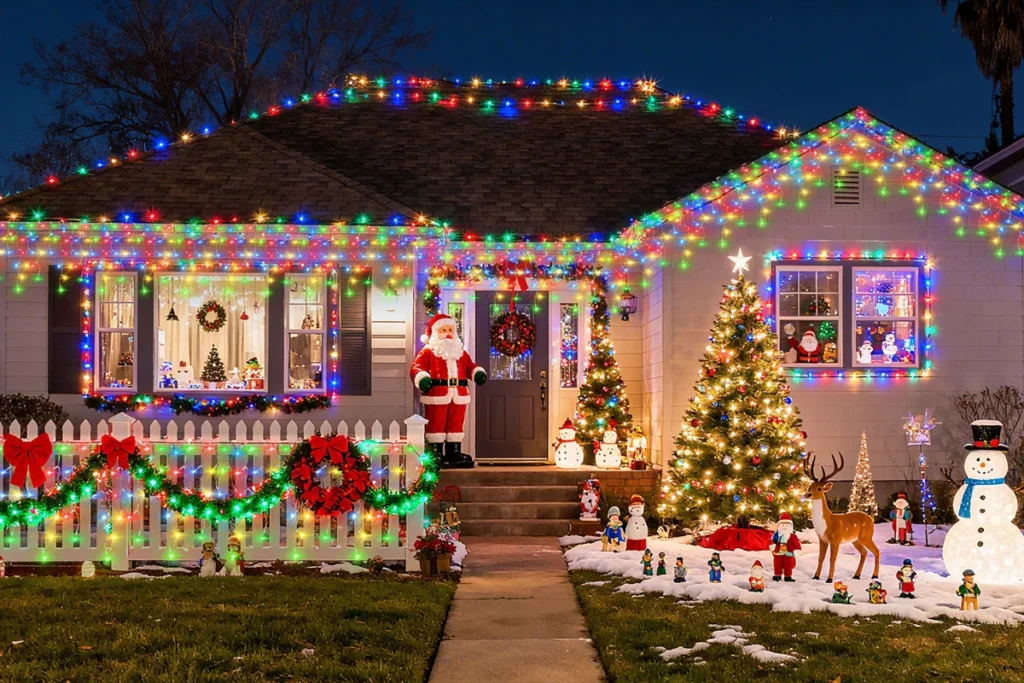
Many homeowners love the idea of a beautiful holiday display, but when they start hanging lights, the results often look uneven, cluttered, or unfinished. You may spend hours on installation only to feel that your home still doesn’t have the polished look you see in professional displays.
The good news is that creating a professional-looking holiday exterior is not just about using more lights. It is about choosing the right placement, maintaining consistency, and highlighting your home’s best architectural features. With a few smart design decisions, you can transform an ordinary arrangement into one that looks elegant and intentional.
In this guide, you will discover practical outdoor Christmas lights ideas that can help your home stand out this holiday season while still looking balanced and professionally designed.
Start With a Simple Roofline Design
One of the easiest ways to achieve a professional appearance is to outline the roofline. This arrangement creates a clean frame around the house and immediately gives the display structure.
Focus on:
- Eaves and gutters.
- Peaks and gables.
- Dormers.
- Garage rooflines.
Professionals often use a single style of bulb along the roofline so the lighting appears uniform. Mixing multiple bulb sizes or colors can make the arrangement feel inconsistent.
If you are new to holiday lighting, start with warm white lights along the roofline before adding additional features.
Highlight Architectural Features
Instead of covering every surface with lights, draw attention to the features that make your home unique.
Consider illuminating:
- Columns.
- Stone accents.
- Entry arches.
- Balcony railings.
- Decorative trim.
This approach creates depth and visual interest without making the house look overcrowded.
A common professional technique is to use brighter roofline lighting and slightly softer accent lighting on architectural details. This creates a layered effect that looks much more sophisticated.
Use Symmetry Whenever Possible
Symmetry is one of the biggest differences between amateur and professional displays.
For example:
- If you wrap one column, wrap the matching column.
- If you place wreaths on two windows, use the same size and lighting on both.
- If you install lights on one side of the entryway, mirror them on the other side.
Even a simple display can look expensive when the lighting is balanced and symmetrical.
Choose a Consistent Color Scheme
Professional displays usually follow a limited color palette.
Popular professional combinations
1. Warm white only
Classic and refined
2. Warm white with gold accents
Upscale holiday look
3. Red and warm white
Traditional holiday style
4. Cool white with blue accents
Modern winter theme
Try to avoid using many unrelated colors in the same display. While multicolor lights can be festive, they are harder to coordinate and can quickly appear busy.
Wrap Trees and Shrubs Strategically
Landscaping lighting can make a huge difference in the overall presentation.
For trees:
- Wrap the trunk first.
- Continue onto major branches.
- Keep spacing between wraps consistent.
For shrubs:
- Use net lights for even coverage.
- Avoid bunching lights in one area.
- Maintain the natural shape of the shrub.
Well-lit landscaping helps connect the house lighting to the yard, creating a complete design rather than isolated sections.
Create a Welcoming Entryway
Your front door is often the focal point of the display.
Some professional-looking ideas include:
- Wrapping the door frame with warm white lights.
- Adding a pre-lit wreath.
- Placing matching lanterns or illuminated planters on each side.
- Using garland along the porch railing.
When guests approach the home, the entryway should feel intentional and inviting.
Add Depth With Layered Lighting
Professional displays rarely rely on a single layer of lights.
Instead, combine:
- Primary lighting: Roofline and major outlines
- Secondary lighting: Windows, columns, and railings
- Accent lighting: Trees, shrubs, wreaths, and decorative features
This layering creates dimension and prevents the house from looking flat at night.
Avoid Common Mistakes
Even expensive outdoor Christmas lights can look unprofessional if a few details are overlooked.
What to avoid
1. Uneven spacing between bulbs
Inconsistent gaps make rooflines look wavy and unfinished.
2. Visible extension cords
Hide cords behind trim, shrubs, or painted clips whenever possible.
3. Mixing warm and cool white lights
Different color temperatures can clash and look accidental.
4. Overloading one area with lights
Concentrated brightness in one section throws off the balance of the display.
5. Ignoring dark gaps in the design
Large unlit sections can make the overall display feel incomplete.
Use Lighting Clips Instead of Staples
One detail that immediately improves the appearance of a display is proper mounting hardware.
Professional installers typically use:
- Gutter clips.
- Shingle clips.
- Universal roofline clips.
- Adhesive clips for smooth surfaces.
These keep lights aligned neatly and help protect your home from damage that staples or nails can cause.
Consider Permanent Lighting for a Seamless Look
If you decorate every year, permanent lighting systems can provide a particularly clean appearance.
Because the lights are installed discreetly along the roofline, they remain nearly invisible during the day. When activated, they provide consistent spacing and professional alignment without the need for seasonal installation.
Many homeowners also appreciate being able to change colors for different holidays and events throughout the year.
A Simple Professional Design Example
If you are unsure where to start, this is a balanced setup that works well for many homes:
Example layout
- Warm white roofline lights outlining the main peaks and eaves.
- Matching lights around the front door.
- A pre-lit wreath centered on the door.
- Two wrapped porch columns.
- Trunk lighting on one or two prominent trees.
- Soft net lights on front shrubs.
Result: A clean, sophisticated display that looks intentional without requiring an excessive number of lights..
FAQs
1. What color lights look the most professional on a house?
Warm white lights are generally considered the most professional because they create a clean, refined appearance and are among the most popular light ideas for most home styles.
2. How many colors should I use in my display?
Limiting the display to one or two complementary colors usually creates the most polished and cohesive result.
3. Should I outline every part of my roof?
Not necessarily. Highlighting the main roofline and prominent architectural features is often enough to create a professional appearance.
4. Are C9 bulbs better than mini lights for rooflines?
Many professional installers prefer C9-style bulbs for rooflines because they are highly visible from a distance and create a classic holiday look.
5. How do I keep extension cords hidden?
Run cords behind gutters, trim, landscaping, or other architectural elements, and use clips to secure them neatly.
6. Can I mix warm white and cool white lights?
It is generally best to avoid mixing them because the different color temperatures can make the display look inconsistent.
7. What is the easiest professional-looking setup?
A simple roofline outline with warm white lights and a matching lit entryway is often the easiest way to achieve a professional appearance.
8. Should trees and shrubs match the house lights?
Yes. Using the same color temperature and style helps create a unified design across the property.
9. How can I make a small house look impressive?
Focus on symmetry, clean roofline outlines, and a well-lit entryway rather than trying to cover every surface with lights.
10. Are permanent lighting systems worth considering?
For homeowners who decorate every year, permanent systems can provide a consistently professional look while reducing annual installation work.
Final Words
Creating a display that looks professionally installed does not require thousands of lights or an elaborate design. The most effective christmas lights on house ideas focus on clean roofline outlines, balanced symmetry, thoughtful color choices, and strategic accent lighting.
When you highlight your home’s architectural features and keep the overall design consistent, even a relatively simple setup can look sophisticated and high-end. Start with the roofline, add a welcoming entryway, and layer in landscaping accents. By following these principles, your home can achieve the polished holiday appearance that many homeowners are trying to create.