

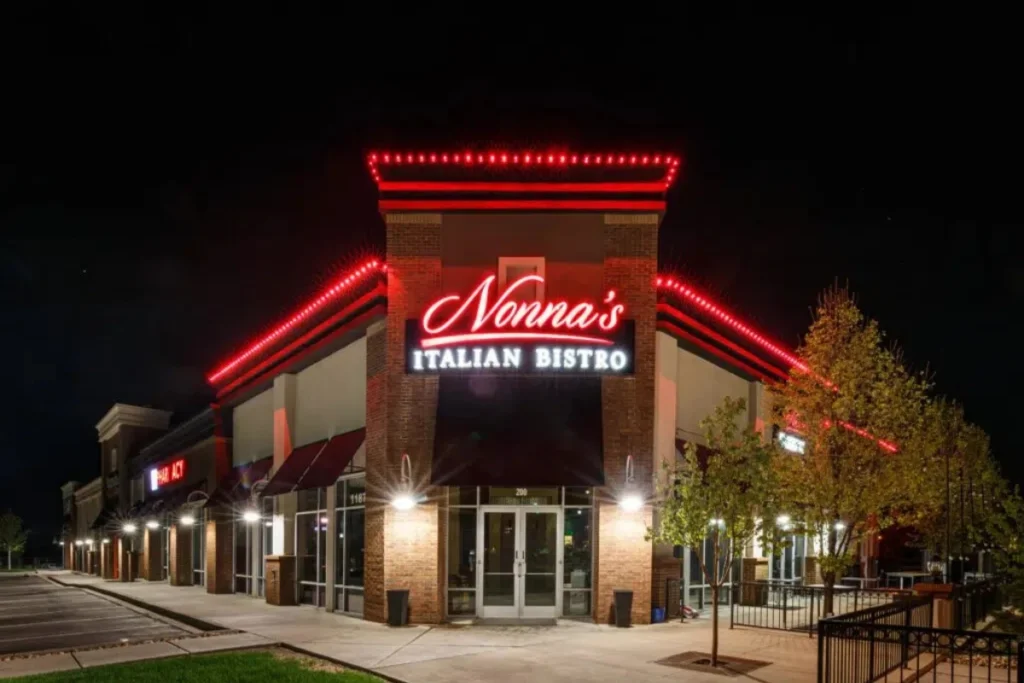
Many storefront owners invest heavily in signage, landscaping, and interior displays, but they often overlook one thing that affects customers before they even walk through the door. If your building looks dark, uninviting, or difficult to notice at night, potential customers may simply keep driving.
That is where commercial exterior lighting makes a major difference. A well-lit storefront attracts attention, improves safety, and helps your business look professional after sunset. Whether you own a retail shop, restaurant, office, or service-based business, The right commercial lighting can increase visibility and create a stronger first impression.
In this guide, you will learn how commercial exterior lighting works for storefronts, which lighting techniques are most effective, and how to choose a system that supports both appearance and functionality.
Why Storefront Lighting Matters
Your storefront is often the first interaction a customer has with your business. During daylight hours, your signage and building design may stand out naturally. At night, however, lighting becomes the primary feature people notice.
Good commercial exterior lighting helps your business by:
- Making the storefront visible from a greater distance.
- Highlighting signs, entrances, and architectural features.
- Creating a welcoming atmosphere for customers.
- Improving safety around walkways and parking areas.
- Reducing dark spots that can lead to security concerns.
- Reinforcing a professional and well-maintained appearance.
A brightly lit storefront signals that the business is active, trustworthy, and open for customers.
The Main Goals of Commercial Exterior Lighting
Storefront lighting should do more than simply brighten the building. The most effective systems are designed with several goals in mind.
1. Visibility
Customers should be able to identify your business quickly, even from the street. Lighting around signs and entrances makes the storefront easier to locate.
2. Safety
Proper illumination helps people see steps, curbs, pathways, and parking areas. This reduces the risk of accidents and improves customer confidence.
3. Security
Well-lit exterior areas discourage unwanted activity. Lighting around entrances, side walkways, and service areas improves overall property security.
4. Branding
Lighting helps communicate your brand. A luxury boutique may use warm, focused lighting, while a modern retail space may prefer crisp, bright illumination.
5. Energy Efficiency
Modern LED commercial exterior lighting provides strong illumination while using significantly less electricity than older lighting technologies.
Best Types of Commercial Exterior Lighting for Storefronts
Different fixtures serve different purposes. Combining several types of lighting often produces the best results.
1. Wall-Mounted Lights
These fixtures are installed directly on the building exterior.
Best for: General storefront illumination, entrances, and side walls.
Benefits:
- Provides broad coverage.
- Improves visibility around doors.
- Works well with most commercial buildings.
2. Uplighting
Uplights are placed near the base of the building and directed upward.
Best for: Architectural features, columns, and textured facades.
Benefits:
- Adds depth and dimension.
- Creates a more upscale appearance.
- Draws attention to unique building elements.
3. Sign Lighting
Dedicated fixtures illuminate business signage.
Best for: Store names, logos, and promotional signs.
Benefits:
- Makes the business easier to identify.
- Improves visibility after dark.
- Enhances brand recognition.
4. Canopy and Entrance Lighting
Installed above doors, awnings, or covered walkways.
Best for: Main customer entrances.
Benefits:
- Creates a welcoming entry point.
- Improves safety when entering or exiting.
- Highlights the primary access area.
5. Landscape Lighting
Used around planters, trees, and decorative landscaping near the storefront.
Best for: Enhancing curb appeal.
Benefits:
- Softens the appearance of the property.
- Adds visual interest.
- Creates a more polished overall presentation.
How Lighting Influences Customer Behavior
Exterior lighting affects how people feel about a business before they enter.
Research consistently shows that customers are more likely to approach a well-lit storefront than a dark one. Lighting can influence:
- Perceived safety: People feel more comfortable walking toward a brightly illuminated entrance.
- Perceived quality: A professionally lit storefront often appears more established and successful.
- Dwell time: Attractive lighting can encourage customers to spend more time near the business.
- Impulse visits: Drivers and pedestrians are more likely to notice and enter a visually appealing storefront.
For restaurants, retail shops, and entertainment venues, lighting can play a direct role in increasing evening traffic.
Common Storefront Lighting Mistakes
Even businesses that invest in lighting sometimes make design mistakes that reduce effectiveness.
Using fixtures that are too bright
Excessive brightness can create glare and make the storefront uncomfortable to look at.
Ignoring the entrance
The main doorway should be one of the brightest and most visible areas of the property.
Uneven lighting
Bright areas next to dark patches create poor visibility and can look unprofessional.
Neglecting maintenance
Burned-out fixtures or mismatched bulb colors make the property appear poorly maintained.
Choosing style over function
Decorative fixtures should still provide adequate illumination for safety and visibility.
Why LED Lighting Is the Preferred Choice
Most modern commercial exterior lighting systems use LED technology because it offers significant advantages.
Lower energy consumption
LED lighting fixtures use substantially less electricity than traditional metal halide or incandescent systems.
Longer lifespan
Many commercial-grade LED fixtures last tens of thousands of hours, reducing maintenance costs.
Better light quality
LEDs provide consistent illumination and excellent color rendering, which helps storefronts look cleaner and more attractive.
Reduced heat output
LED fixtures generate less heat and provide high efficiency, improving overall performance and fixture longevity.
Smart control compatibility
Many systems can be connected to timers, photocells, or app-based controls for automated operation.
Planning a Storefront Lighting Design
Before installing commercial exterior lighting, evaluate the property carefully.
Start by identifying:
- The main customer entrance and nearby lighting products.
- Business signage and illuminated products.
- Parking and pedestrian areas.
- Architectural features worth highlighting with lighting products.
- Dark corners or security concerns.
- Nearby residential properties that could be affected by glare.
A balanced design usually includes a combination of ambient, accent, and task lighting.
Lighting Color Temperature for Storefronts
The color of the light affects the mood of the property.
2700K–3000K (Warm White)
Restaurants, boutiques, hospitality businesses
3500K–4000K (Neutral White)
Retail stores, offices, mixed-use storefronts
5000K+ (Cool White)
Security lighting, warehouses, industrial properties
For most storefronts, a neutral white temperature around 3000K–4000K provides the best balance between visibility and visual appeal.
Maintenance Tips for Commercial Exterior Lighting
To keep your storefront looking its best:
- Clean fixtures regularly to remove dust and debris.
- Inspect wiring and mounting hardware.
- Replace damaged lenses or covers.
- Check timers and control settings.
- Ensure all fixtures match in color temperature.
- Trim landscaping that blocks light output.
Regular maintenance helps preserve both performance and appearance.
Frequently Asked Questions
1. What is the best commercial exterior lighting for a storefront?
Wall-mounted LED fixtures combined with sign lighting and entrance lighting usually provide the best overall results.
2. How bright should storefront lighting be?
The entrance and signage should be clearly visible without creating excessive glare. A professional lighting design can help determine the appropriate brightness.
3. Are LED lights worth the investment for commercial buildings?
Yes. LED lighting typically reduces energy costs, requires less maintenance, and provides better light quality than older technologies.
4. Can exterior lighting improve security?
Yes. Well-lit entrances, walkways, and parking areas help deter unwanted activity and improve visibility for customers and employees.
5. What color temperature is best for a retail storefront?
Most retail storefronts perform well with lighting between 3000K and 4000K, which offers a clean and inviting appearance.
6. Should storefront lights stay on all night?
Many businesses use timers or photocells to keep essential security lighting on while reducing unnecessary energy use during closed hours.
7. How often should commercial exterior lighting be maintained?
Inspect the system at least twice a year and clean fixtures regularly to maintain performance.
8. Can uplighting be used on commercial buildings?
Absolutely. Uplighting is an effective way to highlight architectural features and create a more upscale appearance.
9. Does commercial exterior lighting increase property value?
Professional lighting can enhance curb appeal, improve safety, and make the property more attractive to customers and potential tenants.
10. What is the biggest mistake businesses make with storefront lighting?
One of the most common mistakes is creating uneven lighting, where some areas are extremely bright while others remain too dark.
Final Words
Commercial exterior lighting is more than a decorative upgrade for storefronts. It is a practical investment that improves visibility, safety, security, and customer perception. A thoughtfully designed lighting system can help your business stand out after dark and create a stronger connection with potential customers.
By combining entrance lighting, sign illumination, architectural accents, and energy-efficient LED fixtures, you can transform your storefront into a welcoming and professional space that attracts attention day and night. When planned correctly, commercial exterior lighting becomes an asset that supports both your brand image and your business goals.