

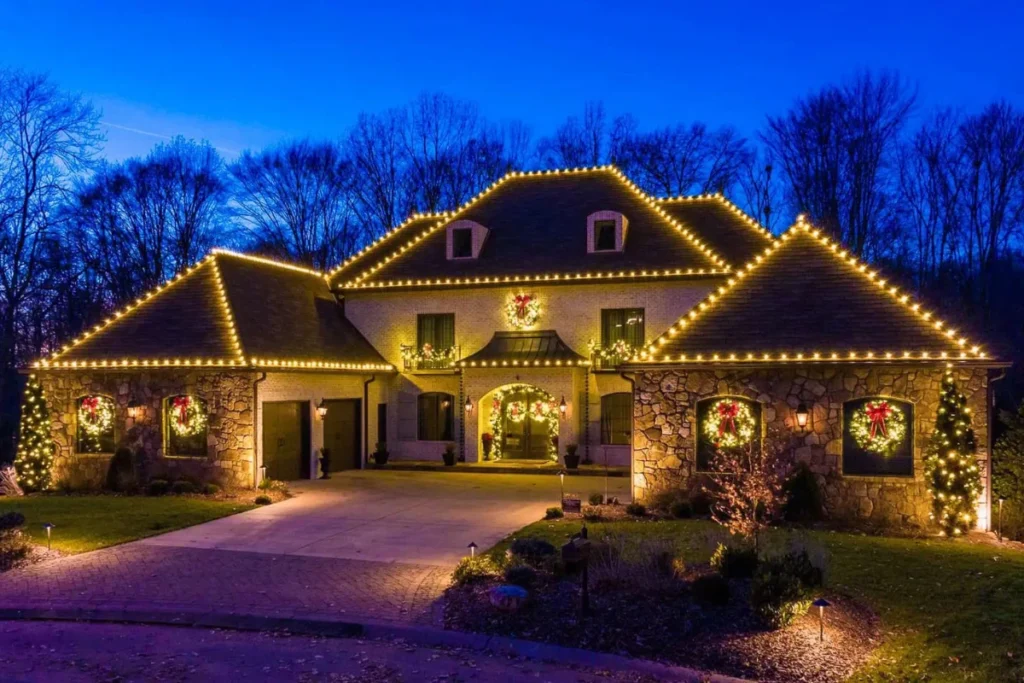
Many homeowners look forward to decorating their homes for the holidays, but once they start planning, one question quickly comes up: How much is the holiday light installation cost going to be? You may want a beautiful display without spending more than expected, and that uncertainty can make the entire project feel overwhelming.
The reality is that professional holiday lighting can range from a few hundred dollars to several thousand dollars, depending on the size of your home and the type of display you choose. Understanding the factors that affect pricing will help you set a realistic budget and avoid surprises.
In this guide, you’ll learn what homeowners should expect when hiring a professional installer and how to determine whether the investment is worth it for your home.
What Is the Average Holiday Light Installation Cost?
For most residential properties, the holiday light installation cost falls somewhere between $300 and $1,500 or more. However, there is no single fixed price because every home is different.
A small single-story home with simple roofline lighting may have an average cost of only a few hundred dollars. On the other hand, a large two-story home with trees, pathways, and custom lighting features can easily exceed $2,000.
Professional installers usually provide custom estimates based on the layout of your home, the amount of lighting needed, and the complexity of the design.
Why Prices Vary So Much
Many homeowners are surprised by how much quotes can differ from one property to another. Several important factors influence the final price.
Home size
Larger homes require more lights and more labor. A long roofline or multiple architectural features will increase the amount of material needed.
Number of stories
Single-story homes are generally less expensive to decorate. Two-story and three-story homes require additional safety equipment, ladders, and installation time.
Type of lighting
Commercial-grade LED lights typically cost more than basic retail lights, but they offer better durability, brighter illumination, and improved energy efficiency.
Design complexity
A simple roofline outline is usually the most affordable option. Costs increase when you add features such as:
- Wrapped trees.
- Lighted bushes.
- Pathway lighting.
- Garlands and wreaths.
- Color-changing systems.
- Custom patterns or animated displays.
Accessibility
Steep roofs, difficult landscaping, or limited access points can make installation more challenging, which often increases labor costs.
What Is Usually Included in Professional Installation?
One of the biggest advantages of hiring a professional company is that the service often includes much more than just hanging lights.
Many professional packages include:
- A custom design consultation: The installer helps create a lighting plan that fits your home’s architecture.
- Commercial-grade lights: Many companies supply the lights rather than requiring you to purchase them separately.
- Installation labor: Professionals safely install lights on roofs, eaves, trees, and other areas.
- Maintenance during the season: If a section stops working, the company may repair it.
- Removal after the holidays: The lights are taken down once the season ends.
- Storage for next year: Some companies store the lights until the following holiday season.
Always ask which of these services are included when comparing quotes from different installers.
How Much Do the Lights Themselves Cost?
If the installer provides the lights, their cost is typically built into the overall quote. Commercial-grade LED lights are more expensive upfront than many store-bought options, but they offer several benefits.
These lights usually last longer, use less electricity, produce brighter illumination, and hold up better in harsh weather conditions. As a result, many property owners find that paying for professional-grade lighting reduces maintenance problems throughout the holiday season.
Is DIY Installation Cheaper?
Installing holiday lights yourself can save money initially, but it is important to consider all the expenses involved.
You may need to purchase lights, extension cords, clips, timers, and possibly a ladder if you do not already own one. In addition, your time has value, especially if installation takes an entire weekend.
Safety is another major consideration. Falls from ladders and roofs are one of the most common holiday decorating injuries. For many homeowners, the convenience and safety of professional installation justify the additional cost.
How Home Size Affects the Budget
As a general guideline, smaller homes often fall in the lower end of the price range, while larger homes with extensive rooflines and landscaping features fall in the higher end.
A modest single-story home may cost only a few hundred dollars, while a large custom home with multiple lighting zones can cost several thousand dollars. The amount of linear footage that needs to be illuminated is one of the biggest pricing factors.
Additional Features That Increase the Cost
If you want a more dramatic display, certain upgrades can significantly increase the total investment.
Common upgrades include:
- Tree wrapping: Large trees require a substantial number of lights and labor hours.
- Landscape lighting: Illuminating bushes, flower beds, and pathways adds both materials and installation time.
- Smart color-changing systems: App-controlled LED systems typically cost more than traditional static lights.
- Architectural accent lighting: Highlighting roof peaks, columns, and other decorative features increases complexity.
- Large wreaths and garlands: Professionally installed greenery with integrated lighting can add several hundred dollars to the project.
When Should You Schedule Installation?
Many property owners wait until November, but experienced installers often book up weeks in advance.
Scheduling in September or October can provide several advantages:
- Better appointment availability.
- More design flexibility.
- Less scheduling pressure.
- Potential early-season discounts.
- Installation completed before winter weather arrives.
Early scheduling is especially helpful in areas where rain, snow, or freezing temperatures can delay outdoor work.
How to Get the Best Value
The cheapest quote is not always the best deal. Instead, focus on overall value and service quality.
Look for a company that offers:
- Commercial-grade materials: Better durability and appearance.
- Proper insurance coverage: Protection for both homeowners and installers.
- Maintenance service: Quick repairs if lights stop working during the season.
- Clear pricing: No hidden fees for removal or repairs.
- Strong local reviews: Positive feedback from previous customers.
Paying slightly more for a reputable installer often leads to a smoother experience and a more attractive display.
What Homeowners Should Budget For
A practical budget for most homes usually falls into one of three categories.
- Basic professional display: Roofline lighting and a simple entryway design.
- Mid-range display: Roofline lighting, entry accents, and some landscaping features.
- Premium custom display: Trees, pathways, architectural accents, and advanced lighting effects.
Having a target budget before requesting quotes will make it easier to choose a design that matches both your vision and your finances.
Frequently Asked Quest
1. How much does holiday light installation cost for an average home?
Most average-sized homes fall between $600 and $1,200, depending on the design and number of lights.
2. Do professional installers provide the lights?
Many companies include commercial-grade lights as part of the installation package, but you should confirm this when requesting a quote.
3. Is removal included in the price?
Some companies include removal in the original quote, while others charge separately. Always ask before signing a contract.
4. How long does installation take?
Most residential installations take between a few hours and a full day, depending on the size and complexity of the display.
5. Are LED holiday lights worth the extra cost?
Yes. LED lights use less energy, last longer, and generally provide brighter, more reliable illumination.
6. Can I use my own lights?
Many installers will work with homeowner-supplied lights, although some companies prefer using their own commercial-grade products.
7. What happens if a section of lights stops working?
If maintenance service is included, the installer will typically return and repair the issue during the holiday season.
8. Do steep roofs cost more?
Yes. Steep or difficult-to-access roofs usually require additional safety measures and labor time, which increases the installation cost.
9. Can holiday lights be installed before Thanksgiving?
Absolutely. Many property owners schedule installation in October or early November to avoid peak-season availability issues.
10. How can I reduce my installation cost?
Choosing a simpler design, limiting tree wrapping, and booking early are some of the most effective ways to keep costs manageable.
Final Words
Understanding the holiday light installation cost helps you make informed decisions and avoid unexpected expenses during the busiest time of the year. While prices vary based on home size, design complexity, and materials, professional installation offers convenience, safety, and a polished appearance that is difficult to achieve on your own.
If you are planning a holiday display this season, start by setting a realistic budget and requesting quotes early. With the right installer, you can enjoy a beautiful, professionally designed lighting display that enhances your home and allows you to focus on what matters most—enjoying the holidays with family and friends.