

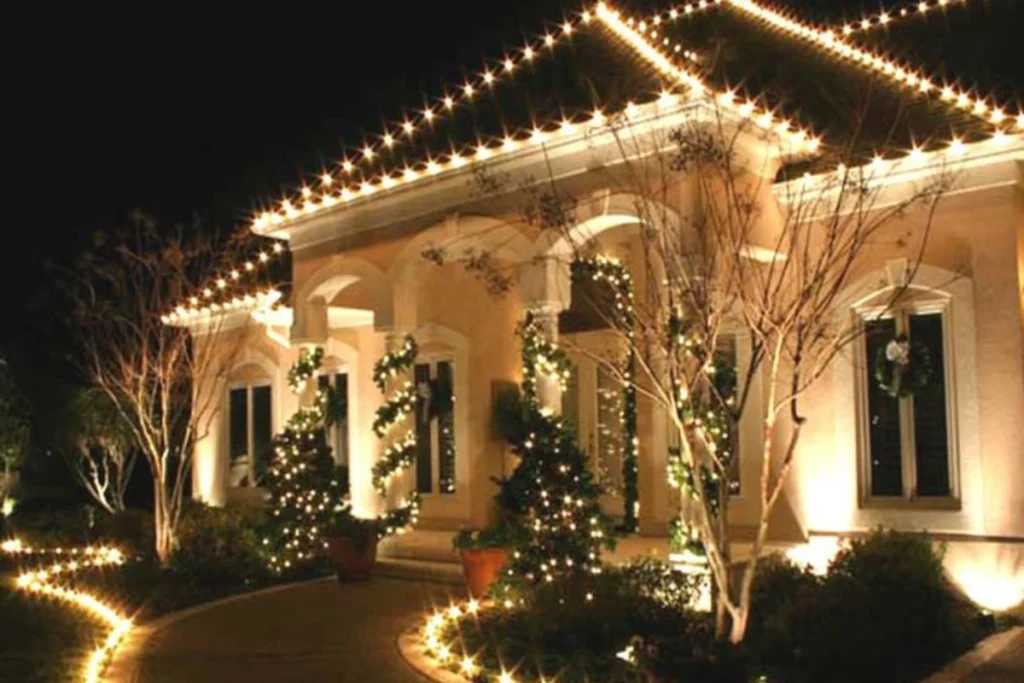
Many homeowners in tropical areas love decorating for the holidays, but they quickly run into a problem. Bright multicolored lights can feel overwhelming against palm trees, stucco walls, and lush landscaping. In addition, harsh lighting often clashes with the relaxed atmosphere that makes tropical homes so appealing.
If you have ever looked at your home after installing holiday lights and thought, “This feels too busy,” you are not alone. That is exactly why warm white LED outdoor Christmas lights have become one of the most popular choices for tropical homes. They create a soft, elegant glow that highlights your home’s architecture without making the property look overly flashy.
In this guide, you will learn why warm white lighting works so well in tropical climates, where to place the lights, how to choose the right products, and how to create a beautiful holiday display that feels welcoming rather than overwhelming.
Why Warm White Lights Look Better in Tropical Settings
Tropical homes often feature light-colored exteriors, natural stone, wood accents, and abundant greenery. Cool white lights can sometimes appear stark or bluish against these materials. Warm white lighting, however, complements the natural tones found in coastal and tropical architecture.
Think of warm white lighting as similar to the glow of a candle or a sunset. It adds warmth and depth instead of creating a sharp contrast.
Here is why many homeowners prefer it:
- It complements palm trees and tropical landscaping: The golden tone blends naturally with green foliage and textured plants.
- It highlights architectural details: Rooflines, columns, arches, and entryways become more noticeable without looking harsh.
- It creates a relaxed atmosphere: Tropical homes are often associated with comfort and outdoor living, and warm white Christmas lighting enhances that feeling.
- It looks elegant year after year: Unlike some trendy colors combinations, warm white lighting has a timeless appearance.
The Best Places to Install Warm White Outdoor Christmas Lights
One of the biggest mistakes homeowners make is placing lights everywhere. A tropical home usually looks better when the lighting design is focused and intentional.
Rooflines and Eaves
Roofline lighting is often the centerpiece of a holiday display. Warm white bulbs along the eaves create a clean outline that makes the home stand out after sunset.
This works especially well on Mediterranean-style homes, coastal cottages, stucco homes, and homes with multiple roof peaks.
Palm Trees
Wrapping palm trunks with warm white mini lights is one of the easiest ways to create a tropical holiday look. The vertical glow draws attention to the trees without competing with the rest of the display.
For a polished appearance:
- Start at the base of the trunk.
- Wrap evenly with consistent spacing.
- Avoid overly tight or loose spirals.
Entryways and Front Doors
Your front entrance should feel inviting. Warm white lights around the doorway or along a wreath can create a welcoming focal point for guests.
Lanai and Patio Areas
In tropical climates, outdoor living spaces are used year-round. Adding warm white Christmas light string lights to a covered patio, pergola, or lanai allows you to enjoy the holiday ambiance while relaxing outdoors.
Choosing the Right Color Temperature
Not all “warm white” lights are the same. When shopping for warm white outdoor christmas lights, look for a color temperature between 2200K and 3000K.
Lights in the 2200K–2700K range produce a very warm, candle-like glow, while 2700K–3000K offers a soft warm white with slightly more brightness. Anything above 4000K often appears too cool for tropical homes.
If you are unsure, 2700K is usually the safest choice for a balanced warm glow.
LED vs. Incandescent Lights
Many homeowners still remember the traditional incandescent Christmas lights. While they produce a warm color, modern LED options offer several advantages.
Why LED warm white lights are usually the better choice:
- Lower energy consumption: This is important when lights run for several hours each evening.
- Less heat output: A useful feature in warm and humid climates.
- Longer lifespan: Quality LED lights can last for many holiday seasons.
- Better weather resistance: This is especially important in areas with humidity, rain, and salt air.
Although incandescent lights have a nostalgic charm, most professional installations now use commercial-grade LED systems because they are more durable and efficient.
How to Avoid a Harsh or Overly Bright Display
Tropical homes often look best with layered lighting rather than maximum brightness.
Instead of adding more strands everywhere, try these techniques:
- Use larger C9 bulbs on rooflines for a classic, elegant outline.
- Use smaller mini lights on trees and shrubs to create texture.
- Leave some areas dark so the illuminated sections stand out.
- Focus on key architectural features rather than covering every surface.
A well-designed display often uses fewer lights than homeowners expect.
Decorating Palm Trees the Right Way
Palm trees are one of the defining features of many tropical properties, so they deserve special attention.
For a professional look:
- Choose outdoor-rated LED mini lights: They are flexible and easy to wrap around the trunk.
- Wrap only the trunk or lower canopy: Wrapping every frond can make the tree look cluttered.
- Keep spacing consistent: Even spacing creates a cleaner appearance at night.
- Secure connections properly: Humidity and rain can affect loose connections over time.
When done correctly, palm trees become dramatic vertical accents that tie the entire lighting design together.
Common Mistakes Homeowners Make
Mixing Warm White and Cool White
Different white tones can clash and make the display look inconsistent. Stick with one color temperature throughout the property.
Using Indoor Lights Outside
Always choose lights that are rated for outdoor use. Tropical weather can be tough on electrical components.
Overloading Extension Cords
Even LED lights should be connected according to the manufacturer’s guidelines. Proper electrical planning improves both safety and reliability.
Ignoring Daytime Appearance
Your home should still look attractive during the day. Neatly installed lights and concealed wiring make a big difference.
A Simple Lighting Plan for Tropical Homes
If you are not sure where to start, this balanced approach works for many homes:
- Outline the roofline with warm white C9 LED bulbs.
- Wrap two to four palm trees with mini lights.
- Frame the front doorway with warm white lighting.
- Add soft string lighting to a lanai or patio.
- Lightly wrap a few shrubs for additional texture.
This setup provides depth, balance, and a cohesive tropical holiday look without excessive brightness.
FAQs
1. Are warm white outdoor Christmas lights suitable for humid climates?
Yes. High-quality outdoor-rated LED lights are designed to handle humidity, rain, and temperature changes commonly found in tropical areas.
2. What color temperature is best for tropical homes?
Most tropical homes look best with lights between 2200K and 3000K, with 2700K being a popular choice.
3. Can I leave warm white lights up year-round?
Some homeowners do, especially if they use permanent lighting systems. However, seasonal lights should be maintained and inspected regularly.
4. Do warm white lights attract fewer insects than cool white lights?
While no light is completely insect-proof, warmer color temperatures generally attract fewer insects than cooler blue-toned lighting.
5. Should I use C9 bulbs or mini lights?
Use C9 bulbs for rooflines and major architectural features, and mini lights for trees, shrubs, and smaller accents.
6. How do I keep lights secure during storms?
Use proper outdoor clips, weather-resistant connections, and avoid relying solely on staples or tape.
7. Is LED lighting bright enough for large homes?
Yes. Commercial-grade LED lights are available in brightness levels suitable for both small homes and large estates.
8. Can warm white lights be combined with colored decorations?
Absolutely. Warm white lighting pairs well with red, gold, green, and natural tropical décor.
9. How long do outdoor LED Christmas lights typically last?
Quality LED lights can last many years, often tens of thousands of operating hours with proper care.
10. What is the biggest advantage of warm white lighting?
The biggest advantage is its ability to create an elegant, welcoming atmosphere that complements tropical architecture and landscaping.
Final Words
Choosing warm white outdoor christmas lights is one of the easiest ways to create a sophisticated holiday display for a tropical home. Instead of overwhelming your property with harsh brightness, warm white lighting enhances the natural beauty of palm trees, coastal landscaping, and architectural details.
By focusing on rooflines, entryways, and a few carefully selected landscape features, you can achieve a festive look that feels both elegant and inviting. Whether you are decorating a small coastal cottage or a larger tropical estate, warm white lighting offers a timeless style that will continue to look beautiful season after season.