

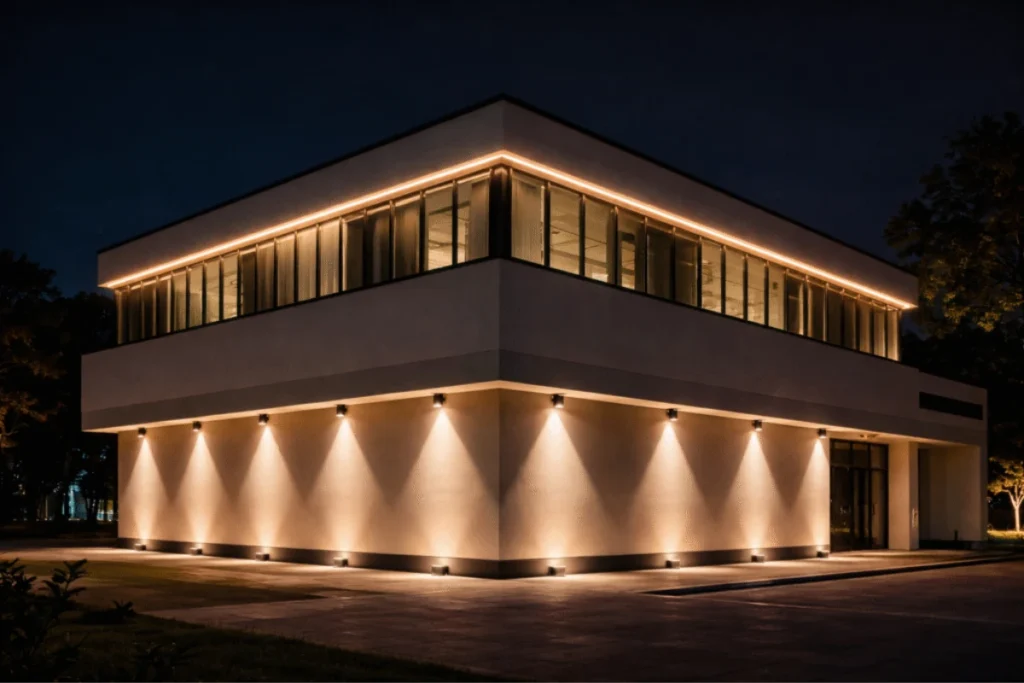
If you’ve invested in a modern home or commercial building, you probably want its clean lines and architectural details to stand out after sunset. Unfortunately, many properties disappear into the darkness once the sun goes down, while others rely on oversized floodlights that create glare instead of elegance.
That’s where parapet lighting makes a noticeable difference. Rather than overwhelming your property’s design, it highlights the architectural features that make contemporary buildings unique. Whether you’re designing a new home, renovating an existing property, or upgrading your outdoor lighting, parapet lighting can transform the appearance of your property while improving visibility and curb appeal.
In this guide, you’ll learn what parapet lighting is, how it works, its benefits, installation considerations, and why it has become a popular choice in contemporary architecture.
What Is Parapet Lighting?
Parapet lighting refers to lighting fixtures installed on, beneath, or around a parapet wall to emphasize the building’s upper edges and architectural profile.
A parapet wall is the extension of an exterior wall that rises above the roofline. While it originally served functional and safety purposes, it has become a defining design element in modern architecture.
Lighting these walls creates subtle illumination that outlines the structure without making it appear overly bright. The result is a sophisticated nighttime appearance that enhances both residential and commercial buildings.
Unlike traditional exterior lighting, parapet lighting focuses on highlighting the architecture rather than add simply lighting the surrounding landscape.
Why Contemporary Architecture Benefits from Parapet Lighting
Modern architecture is built around simplicity, clean geometry, and minimal ornamentation. During the day, natural sunlight emphasizes these features. However, at night, those same design elements can disappear without proper lighting.
Parapet lighting helps preserve the architectural character after dark by creating depth and definition.
Some of the biggest advantages include:
- It highlights clean rooflines: Contemporary buildings often feature straight edges and flat roofs. Lighting the parapet accentuates these lines beautifully.
- It creates visual balance: Proper illumination prevents the upper portion of the building from disappearing into the night sky.
- It enhances architectural details: Textured materials like stone, concrete, stucco, and metal panels become more noticeable with carefully positioned lighting.
- It improves nighttime aesthetics: The building maintains its visual appeal long after sunset.
The result is an elegant appearance that complements modern design instead of overpowering it.
How Parapet Lighting Works
Parapet lighting typically uses discreet LED fixtures hidden beneath coping caps, mounted along parapet walls, or integrated into architectural details.
Instead of shining directly into people’s eyes, these fixtures produce indirect illumination that washes across the wall or highlights the roofline.
Depending on the design goals, lighting may be directed:
- Upward to emphasize the parapet wall itself.
- Downward to create a soft wall-washing effect.
- Along the roofline for a continuous illuminated edge.
- Across architectural surfaces to reveal texture.
This indirect lighting creates a premium appearance while minimizing glare.
Types of Parapet Lighting
Several lighting techniques can achieve different visual effects.
1. Linear LED Lighting
Linear LED fixtures are among the most popular choices for parapet lighting.
These fixtures create a continuous line of illumination that perfectly complements contemporary architecture. Since they can be concealed within architectural features, only the light—not the fixture—is visible.
2. Wall Wash Lighting
Wall washing uses carefully positioned fixtures to spread light evenly across the parapet wall.
This technique works especially well for textured concrete, brick, stone, or decorative finishes because it reveals surface depth without creating harsh shadows.
3. Grazing Lighting
Unlike wall washing, grazing places the light very close to the wall surface.
The result is dramatic shadows that emphasize textures and create a bold architectural statement.
4. Concealed LED Strip Lighting
LED strip lighting hidden beneath coping stones or architectural trim creates a floating effect.
This approach is ideal for minimalist buildings because the lighting appears almost invisible during the day.
Benefits of Parapet Lighting
Property owners choose parapet lighting for more than aesthetics.
1. Improved Curb Appeal
A beautifully illuminated building naturally attracts attention.
Whether it’s your home or commercial property, professional parapet lighting creates a polished appearance that leaves a lasting impression on visitors and passersby.
2. Increased Property Value
Quality architectural lighting often adds perceived value to a property.
Potential buyers appreciate homes that already include professionally designed outdoor lighting systems because they enhance both beauty and functionality.
3. Better Safety
While parapet lighting isn’t designed as security lighting, it still contributes to safer outdoor environments.
Well-lit rooflines and building edges improve visibility around entrances, pathways, and surrounding areas.
4. Energy Efficiency
Modern parapet lighting relies primarily on LED technology.
LED fixtures consume significantly less electricity than older lighting options while producing excellent brightness and lasting for many years.
5. Low Maintenance
High-quality outdoor LED fixtures require very little maintenance.
Once professionally installed, they can operate reliably for years with minimal upkeep.
Choosing the Right Color Temperature
Color temperature dramatically influences the final appearance of your building.
- Warm white lighting: creates a welcoming atmosphere that’s ideal for residential properties.
- Neutral white: offers a clean, balanced look that complements many architectural styles.
- Cool white: produces a crisp, modern appearance often preferred for commercial buildings with sleek contemporary designs.
Choosing the appropriate color temperature ensures the lighting enhances the building rather than making it feel cold or overly bright.
Best Applications for Parapet Lighting
- Parapet lighting works across many different property types.
- Residential homes with flat roofs benefit from subtle architectural definition.
- Luxury custom homes gain a premium nighttime appearance.
- Office buildings project professionalism after business hours.
- Hotels create welcoming entrances with elegant roofline illumination.
- Restaurants use parapet lighting to establish an upscale atmosphere.
- Retail stores attract customers with distinctive nighttime curb appeal.
- Apartment buildings enhance both aesthetics and visibility for residents and visitors.
Design Tips for Contemporary Architecture
Successful parapet lighting requires thoughtful planning.
Keep these recommendations in mind:
- Use consistent spacing between fixtures to avoid uneven brightness.
- Choose concealed fixtures whenever possible to maintain clean architectural lines.
- Avoid excessive brightness that distracts from the building itself.
- Select lighting that complements the building materials.
- Consider integrating smart lighting controls for scheduling and seasonal adjustments.
- Coordinate parapet lighting with other exterior lighting for a unified design.
Small design decisions often make a significant difference in the final result.
Common Installation Mistakes to Avoid
Even premium fixtures won’t produce attractive results if they’re installed incorrectly.
Some common mistakes include:
- Installing fixtures where they are visible from the ground.
- Mixing different color temperatures on the same building.
- Using lights that are too bright for the property’s scale.
- Ignoring waterproof ratings for outdoor installations.
- Failing to plan wiring before construction or remodeling.
- Placing fixtures too far apart, resulting in uneven illumination.
Working with experienced lighting professionals helps prevent these issues and ensures the finished installation looks intentional and refined.
Why LED Is the Best Choice for Parapet Lighting
LED technology has become the preferred solution for modern architectural lighting.
Compared to traditional lighting systems, LEDs provide:
- Lower energy consumption without sacrificing brightness.
- Longer lifespan, often lasting tens of thousands of hours.
- Reduced maintenance requirements.
- Better color consistency across fixtures.
- Minimal heat generation.
- Compatibility with dimmers and smart lighting systems.
These advantages make LEDs an excellent long-term investment for both homes and commercial properties.
Can Parapet Lighting Be Combined with Other Outdoor Lighting?
Absolutely.
Many contemporary properties combine parapet lighting with other exterior lighting techniques to create a layered lighting design.
Popular combinations include:
- Landscape lighting around gardens and pathways.
- Entry lighting that improves safety and visibility.
- Accent lighting for architectural columns and stone walls.
- Deck and patio lighting for outdoor living spaces.
- Permanent LED lighting systems that can also be customized for holidays and special occasions.
When these elements work together, the entire property feels cohesive and professionally designed.
Is Professional Installation Worth It?
Although some lighting products are marketed as DIY-friendly, parapet lighting usually requires careful planning.
Professionals understand fixture placement, beam angles, wiring requirements, waterproofing, electrical safety, and lighting balance.
They also know how to hide fixtures so the lighting appears seamless during both day and night.
Professional installation often produces cleaner, more durable results that maximize the beauty of your architectural investment.
Frequently Asked Questions
1. What is parapet lighting?
Parapet lighting is an architectural lighting technique that illuminates parapet walls or rooflines to enhance a building’s appearance after dark.
2. Is parapet lighting suitable for residential homes?
Yes. It works particularly well on contemporary homes, luxury residences, and houses with flat or modern roof designs.
3. Does parapet lighting use a lot of electricity?
No. Modern LED parapet lighting is highly energy-efficient and consumes relatively little electricity.
4. Can parapet lighting improve property value?
Professionally designed architectural lighting can improve curb appeal and make a property more attractive to potential buyers.
5. What color temperature is best for parapet lighting?
Warm white is popular for homes, while neutral or cool white is often chosen for commercial buildings, depending on the desired appearance.
6. Can parapet lighting be controlled with a smartphone?
Yes. Many modern LED systems support smart controls that allow scheduling, dimming, color adjustments, and remote operation.
7. Is parapet lighting weather-resistant?
Quality outdoor fixtures are specifically designed to withstand rain, snow, wind, and temperature changes when properly installed.
8. How long do LED parapet lights last?
Most high-quality LED fixtures can last for many years, often providing tens of thousands of hours of operation.
9. Can parapet lighting be added to an existing building?
Yes. Many existing residential and commercial buildings can be retrofitted with parapet lighting, although the installation approach depends on the building’s design.
10. Does parapet lighting work with holiday lighting systems?
Yes. Many property owners combine permanent architectural lighting with programmable LED systems that can display seasonal colors for holidays and special events while maintaining an elegant everyday appearance.
Final Words
Modern architecture deserves to be appreciated both day and night. Parapet lighting provides a subtle yet powerful way to highlight clean rooflines, architectural details, and contemporary design without overwhelming the building. With energy-efficient LED technology, thoughtful fixture placement, and professional installation, you can create an inviting nighttime appearance that enhances curb appeal, improves visibility, and adds lasting value to your property. Whether you’re illuminating a modern home or a commercial building, parapet lighting is a timeless investment that blends functionality with sophisticated architectural style.