

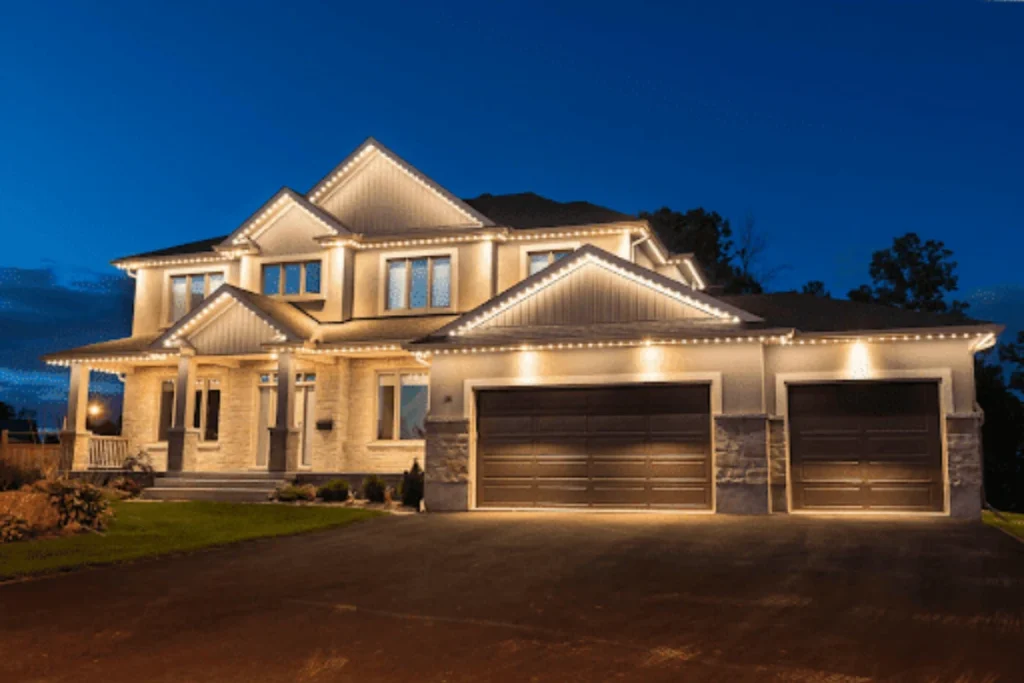
If your home disappears into the darkness after sunset, you’re not alone. Many homeowners invest in landscaping, paint, and architectural details, only to find that none of those features are visible at night. That’s where roofline lighting can completely transform the look of your property.
Whether you’ve seen homes glowing beautifully during the holidays or noticed elegant accent lighting on upscale properties, chances are you were looking at some form of roofline lighting. It adds definition, improves curb appeal, and helps your home stand out long after the sun goes down.
In this guide, you’ll learn what roofline lighting is, how it works, the different types available, and why so many homeowners are choosing it for both everyday use and special occasions.
What Is Roofline Lighting?
Roofline lighting refers to lights installed along the edges of a home’s roof, including the eaves, peaks, and architectural outlines. The purpose is to highlight the shape of the house and create a clean, attractive appearance at night.
Unlike temporary holiday lights that are installed and removed each year, roofline lighting can be either seasonal or permanent. Permanent systems are designed to remain in place year-round and are often controlled through a smartphone app.
Homeowners use roofline lighting for many reasons, including:
- Enhancing curb appeal.
- Improving nighttime visibility.
- Celebrating holidays and special events.
- Highlighting architectural features.
- Creating a welcoming appearance.
How Roofline Lighting Works
Roofline lighting is typically mounted under the roof edge or attached discreetly along the trim. The lights are connected to a power source and, in many modern systems, to a controller that allows you to change colors, brightness, and schedules.
Here’s the basic process:
- Lights are installed along the roofline: This may include straight sections, corners, dormers, and gables.
- Wiring is concealed: Professional installations usually hide the wiring for a cleaner look.
- A controller manages the system: Many permanent systems connect to a mobile app.
- Lighting schedules can be programmed: You can set the lights to turn on automatically at sunset and off later in the evening.
The result is a polished lighting effect that looks intentional rather than temporary.
Types of Roofline Lighting
1. Permanent Roofline Lighting
Permanent systems stay installed all year and are designed to blend into the roofline during the day.
Common features include:
- Color-changing LED lights.
- App-based control.
- Custom outdoor lighting scenes.
- Automatic scheduling.
- Long lifespan.
Many homeowners use permanent roofline lighting for holidays, game days, birthdays, and everyday architectural lighting.
2. Seasonal Roofline Lighting
Seasonal lighting is installed for a specific time of year, most commonly during the holiday season.
This option is often chosen when:
- You only want lighting for a few weeks each year.
- You prefer traditional holiday displays.
- You are not ready to invest in a permanent system.
Professional installation can still provide a clean, custom appearance without the hassle of doing it yourself.
Benefits of Roofline Lighting
1. Boosts Curb Appeal
One of the biggest advantages is the dramatic improvement in your home’s appearance. Roofline lighting outlines the structure and makes architectural details visible at night.
A well-lit home often looks more polished and inviting.
2. Adds Year-Round Versatility
With a permanent system, you can change colors for different occasions.
For example:
- Warm white for everyday elegance.
- Red and green for Christmas.
- Orange for Halloween.
- Red, white, and blue for Independence Day.
- Team colors for sporting events.
3. Improves Visibility
While roofline lighting is primarily decorative, it can also improve visibility around entryways, driveways, and walkways.
This can make your property feel safer and easier to navigate at night.
4. Eliminates Annual Installation
If you choose a permanent system, you no longer need to climb ladders every year to hang holiday lights.
That saves time and reduces the risk of falls or roof damage.
What Does Roofline Lighting Cost?
The cost varies depending on:
- The size of your home.
- The complexity of the roofline.
- The type of lighting system.
- Whether the installation is seasonal or permanent.
- The level of smart-control features included.
Simple rooflines generally cost less to install than homes with multiple peaks, dormers, and architectural features.
Permanent LED systems typically require a larger upfront investment, but they eliminate the recurring cost of annual installation and removal.
Is Roofline Lighting Energy Efficient?
Yes. Most modern roofline lighting systems use LED technology, which consumes far less electricity than older incandescent lights.
LED roofline lighting offers:
- Lower energy consumption.
- Longer lifespan.
- Reduced maintenance.
- Brighter output with less power.
- Better durability in outdoor conditions.
Many homeowners find that the operating cost is surprisingly low, especially when using scheduled lighting rather than leaving the lights on all night.
Can Roofline Lighting Increase Home Value?
Roofline lighting is not usually considered a major value-adding renovation like a kitchen remodel. However, it can improve perceived value and curb appeal.
When a home looks well-maintained and visually attractive, it often creates a stronger first impression for visitors and potential buyers.
For luxury and custom homes, professional architectural and landscape lighting can contribute to a more upscale appearance.
DIY vs. Professional Installation
DIY Installation
Pros:
- Lower upfront cost.
- Flexible timing.
- Suitable for small projects.
Cons:
- Ladder safety risks.
- Visible wiring.
- Less consistent appearance.
- More time-consuming.
Professional Installation
Pros:
- Custom fit for your home.
- Concealed wiring.
- Cleaner architectural look.
- Proper mounting and weather protection.
- Less hassle for homeowners.
Cons:
- Higher initial investment.
For permanent roofline lighting, professional installation is often the preferred option because the system is intended to remain in place for many years.
How Long Does Roofline Lighting Last?
Quality LED roofline lighting can last 10 to 20 years or more, depending on the product and usage.
Factors that affect lifespan include:
- LED quality.
- Weather exposure.
- Installation quality.
- Power management.
- Frequency of use.
Professional-grade systems are generally built to withstand rain, snow, heat, and temperature changes better than inexpensive consumer products.
Frequently Asked Questions
1. What is roofline lighting used for?
Roofline lighting is used to highlight the edges and architectural features of a home, improve curb appeal, and provide decorative lighting for holidays, events, or everyday use.
2. Is roofline lighting the same as Christmas lights?
Not exactly. Christmas lights are usually temporary seasonal decorations, while roofline lighting can be either temporary or permanently installed for year-round use.
3. How much electricity does roofline lighting use?
Modern LED roofline lighting uses relatively little electricity. The exact amount depends on the number of lights, brightness settings, and how long the system operates each day.
4. Can roofline lighting stay up all year?
Yes. Permanent roofline lighting systems are specifically designed to remain installed year-round and withstand outdoor weather conditions.
5. Does roofline lighting require maintenance?
LED systems generally require minimal maintenance. Occasional cleaning and inspection of connections may be recommended.
6. Can I change the colors of permanent roofline lights?
Many modern systems allow full color changes through a smartphone app, including custom scenes and scheduled lighting effects.
7. Is roofline lighting waterproof?
Professional outdoor roofline lighting is typically weather-resistant and designed to handle rain, snow, and other outdoor conditions.
8. Can roofline lighting be installed on any home?
Most homes can accommodate roofline lighting, including single-story, two-story, and custom homes with complex roof designs.
9. How long does installation take?
A simple home may be completed in a few hours, while larger or more complex rooflines can take a full day or longer.
10. Is professional installation worth it?
For many homeowners, professional installation provides a cleaner appearance, safer installation process, hidden wiring, and better long-term performance.
Final Words
If you’ve ever wished your home looked as impressive at night as it does during the day, roofline lighting is one of the most effective upgrades you can make. It enhances your home’s architecture, creates a welcoming appearance, and gives you the flexibility to celebrate holidays and special occasions without the hassle of temporary decorations.
Whether you choose a seasonal display or a permanent LED system, the right roofline lighting can transform the entire look of your property. And because modern systems are energy-efficient, durable, and customizable, they offer both visual impact and long-term convenience for homeowners who want their home to shine year-round.