

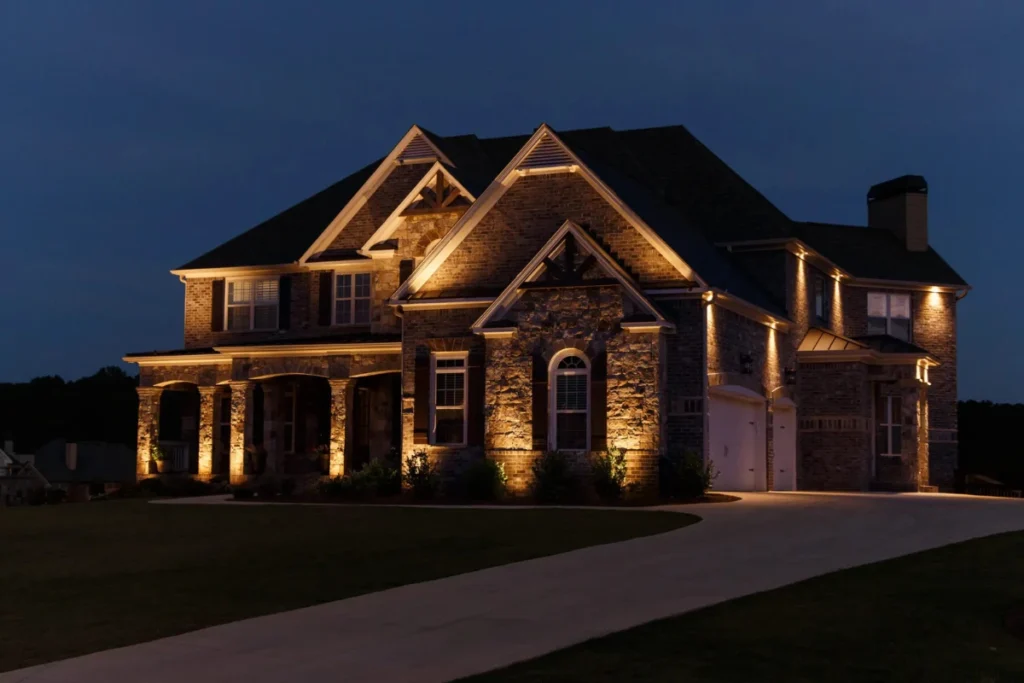
You’ve invested in a modern home with clean lines, quality materials, and attractive landscaping, but once the sun goes down, much of that beauty disappears. This is one of the most common frustrations homeowners face. A house that looks impressive during the day can appear flat, dark, and uninviting at night.
That is where exterior accent lights make a significant difference. Instead of flooding your entire property with harsh light, accent lighting highlights the architectural features and landscaping elements that make your home unique. The result is a sophisticated nighttime appearance that improves curb appeal, enhances safety, and creates a welcoming atmosphere.
In this guide, you’ll learn how exterior accent lights work, where they should be installed, and how to choose the right lighting style for a modern home.
What Are Exterior Accent Lights?
Exterior accent lights are modern outdoor fixtures designed to draw attention to specific areas of a property. Unlike general security lighting, accent lighting is focused and intentional. It emphasizes details rather than illuminating everything equally.
Common uses include:
- Highlighting textured walls such as stone, brick, or wood.
- Emphasizing rooflines and architectural shapes.
- Lighting entryways and front doors.
- Showcasing trees, shrubs, and landscape features.
- Adding subtle illumination to pathways and steps.
Modern homes particularly benefit from accent lighting because contemporary architecture often relies on shape, texture, and contrast.
Why Modern Homes Need Accent Lighting
During daylight hours, natural sunlight reveals the depth and character of your home. At night, those features disappear unless they are intentionally illuminated.
Exterior accent lights help by:
- Creating depth and dimension: Strategic lighting adds shadows and highlights that prevent the exterior from looking flat.
- Enhancing architectural lines: Rooflines, columns, overhangs, and geometric forms become more visible after dark.
- Improving curb appeal: A well-lit home stands out immediately and feels more welcoming.
- Increasing perceived value: Professional-looking exterior lighting often gives a property a more upscale appearance.
Best Locations for Exterior Accent Lights
Along the Roofline
Modern homes frequently feature distinctive roof shapes. Installing discreet lighting under the eaves or along the roofline can emphasize those clean architectural lines without creating an overly bright appearance.
This works especially well for:
- Flat roofs.
- Contemporary overhangs.
- Extended eaves.
- Geometric roof designs.
On Textured Exterior Walls
Stone, brick, concrete, and wood siding can look dramatically different when illuminated correctly. Fixtures placed close to the wall allow light to travel across the surface, revealing texture and creating subtle shadows.
This technique is often called wall grazing and is one of the most effective ways to add visual interest to a modern facade.
Around the Front Entry
Your entryway is naturally a focal point. Accent lights can frame the door, highlight architectural details, and make guests feel welcome.
Consider combining:
- Vertical wall sconces.
- Recessed soffit lights.
- Low landscape uplights near the entrance.
In the Landscaping
Trees, ornamental grasses, and sculptural shrubs can become striking nighttime features. Instead of lighting every plant, focus on a few key elements that complement the architecture of the home.
Soft, focused beams usually create a perfect elegant effect than bright floodlights.
Along Walkways and Steps
Path lighting serves both safety and aesthetic purposes. Low-profile fixtures with warm LED light guide visitors while contributing to the overall lighting design.
Choosing the Right Light Color
One of the most important decisions is color temperature.
For most modern homes, 2700K to 3000K is the ideal range.
- 2700K: Produces a warm, inviting glow that complements stone, wood, and darker exterior finishes.
- 3000K: Provides a slightly crisper appearance while still feeling residential and comfortable.
Cooler temperatures above 4000K can make a home feel harsh or commercial, especially when used on residential architecture.
Popular Accent Lighting Techniques
1. Uplighting
Ground-mounted fixtures shine upward to highlight walls, columns, trees, or architectural features. This is one of the most dramatic and effective techniques for modern homes.
2. Downlighting
Fixtures installed under eaves cast light downward across the facade or walkway. Downlighting creates a clean, minimalist appearance that pairs well with contemporary design.
3. Wall Grazing
Positioning lights close to a textured surface emphasizes shadows and material details. Stone and brick facades benefit especially from this approach.
4. Linear LED Lighting
Concealed LED strips can create continuous lines of light along rooflines, stair edges, retaining walls, or outdoor living areas. This technique is particularly popular in modern architecture.
How Bright Should Exterior Accent Lights Be?
Many homeowners assume brighter lighting will produce a better result. In reality, subtle lighting usually looks more sophisticated.
For residential accent lighting:
- Path lights generally need only a modest amount of light.
- Landscape accent lights should be bright enough to define features without overpowering them.
- Architectural uplights can be slightly stronger but should still avoid creating glare.
Using several lower-output fixtures often produces a more balanced and professional appearance than relying on a few extremely bright lights.
Common Mistakes to Avoid
1. Overlighting the Exterior
Too much light removes the contrast that makes accent lighting effective. A modern home should have a balance of illuminated and shadowed areas.
2. Mixing Different Light Colors
Combining warm and cool LEDs can make the look inconsistent. Choose one color temperature and use it throughout the property.
3. Exposing the Fixture
In contemporary design, the light source itself is often best kept discreet. Concealed fixtures create a cleaner, more refined appearance.
4. Ignoring the Landscape
Accent lighting should connect the house and the landscaping. Lighting only the structure can make the yard disappear into darkness.
5. Using Only One Type of Light
The most attractive designs layer different lighting techniques, such as uplighting, downlighting, and pathway lighting.
Benefits of LED Exterior Accent Lights
Modern exterior accent lighting is typically LED-based because LEDs offer several advantages:
- Lower energy consumption.
- Longer lifespan.
- Reduced maintenance.
- Better color consistency.
- Compatibility with timers and smart controls.
- Improved durability for outdoor conditions.
For homes exposed to heat, cold, wind, or moisture, quality outdoor-rated LED fixtures provide reliable performance year after year.
Creating a Balanced Lighting Design
A simple way to plan exterior accent lighting is to think in layers.
Layer 1: General illumination
Provide enough light for safety around entrances, walkways, and outdoor living areas.
Layer 2: Accent lighting
Highlight architectural details, textured walls, and landscaping features.
Layer 3: Focal points
Add a few stronger visual elements, such as a feature tree, a stone entry wall, or a dramatic column.
This layered approach creates depth while maintaining a clean, modern appearance.
Frequently Asked Questions
1. What are exterior accent lights used for?
They are used to highlight architectural features, landscaping, entryways, pathways, and other focal points around a home.
2. Are LED accent lights suitable for outdoor use?
Yes. LEDs are energy efficient, long-lasting, and designed to withstand outdoor conditions when properly rated.
3. What color temperature is best for modern homes?
Most modern homes look best with warm white lighting between 2700K and 3000K.
4. Can accent lighting increase curb appeal?
Yes. A well-designed lighting system can dramatically improve the nighttime appearance of a property.
5. Do exterior accent lights use a lot of electricity?
LED accent lights typically consume very little energy, making operating costs relatively low.
6. Should accent lights stay on all night?
Many homeowners use timers or smart controls so the lights automatically turn off later in the evening.
7. Can I install accent lights myself?
Some low-voltage landscape lights are suitable for DIY installation, while integrated architectural lighting is often best installed by professionals.
8. What is the difference between accent lighting and floodlighting?
Accent lighting focuses on specific features, while floodlighting illuminates a broad area with more general light.
9. Do accent lights improve safety?
Yes. They can improve visibility around entrances, steps, and walkways while also enhancing appearance.
10. How many accent lights does a house need?
The number depends on the size of the home and the features you want to highlight. A balanced design is usually more important than the total fixture count.
Final Words
The right exterior accent lights can transform a modern home from ordinary after dark to visually striking every evening. By highlighting architectural lines, textured materials, entryways, and landscaping, you create depth, elegance, and a welcoming atmosphere without overwhelming the property with excessive brightness.
Start with a few key focal points, keep the lighting warm and consistent, and focus on balance rather than intensity. A thoughtful accent lighting design will not only improve curb appeal but also help your home maintain its character long after the sun goes down.